Blog

  • Debit Card Usage in the USA – Benefits, Security, and Future Trends

    Debit Card Usage in the USA – Benefits, Security, and Future Trends


    Disclaimer:

    This article is for educational purposes only and is not professional financial advice. Please consult a qualified financial advisor before making any decisions.

    Debit Card Usage in the USA: My Personal Experience and Tips for Safe Spending

    Introduction
    When I first moved to the USA, I noticed that almost everyone used debit cards for daily transactions. From grocery shopping at Walmart to paying for Netflix subscriptions, debit cards seemed to be everywhere. Unlike credit cards, which allow people to spend borrowed money, debit cards only let you spend what you actually have in your checking account. This immediately gave me a sense of control over my finances and made managing my money much easier.

    In this article, I will share my personal experience using debit cards in the USA, explain their benefits, security features, and give you tips to use them safely.


    Why Debit Cards Are So Popular in the USA

    During my first month in the USA, I was amazed at how seamlessly people used debit cards. In lines at grocery stores, cafes, and even small shops, payments were made in seconds. No one had to carry cash, and transactions were instantly reflected in their bank accounts.

    From my observation, the main reasons for their popularity are:

    • No need to carry cash: It’s safer and more convenient.

    • Easy expense tracking: All transactions are visible in the banking app immediately.

    • Secure online shopping: OTPs and fraud alerts give extra safety.

    • Wide acceptance: From small local stores to e-commerce giants like Amazon and eBay.

    Clearly, debit cards have become a preferred payment method for millions of Americans.


    Benefits I’ve Personally Experienced Using Debit Cards

    1. Convenience

    One of the biggest advantages I noticed is convenience. Whether I am buying groceries, dining out, or booking a flight, payments are completed in seconds. I no longer need to count cash or worry about carrying enough money.

    2. Budget Control

    Since my debit card is linked directly to my checking account, I can only spend the money I have. This has helped me stick to a monthly budget and avoid unnecessary debt, unlike when I briefly used a credit card.

    3. Low or No Fees

    Most debit card transactions are free, with minimal fees for out-of-network ATMs. Unlike credit cards, I don’t worry about interest charges piling up.

    4. Safe Online Payments

    When shopping online, I always feel secure. Features like EMV chip technology, two-factor authentication, and real-time alerts make unauthorized transactions rare. My bank also offers a zero-liability policy, so I am protected if my card is ever misused.


    Common Uses I Experience Daily

    From my personal experience, debit cards are used for almost everything in daily life:

    • Grocery shopping at Walmart, Target, and local stores

    • Paying for subscriptions like Netflix, Spotify, and Amazon Prime

    • Dining at restaurants and cafes

    • Utility bill payments such as electricity, water, and internet

    • ATM withdrawals and travel bookings

    It’s remarkable how versatile debit cards are in the USA.


    Tips I Follow to Stay Safe

    Based on my experience, safety is extremely important. Here’s what I do:

    1. Check bank statements regularly

    2. Avoid using public Wi-Fi for transactions

    3. Set spending alerts on mobile banking apps

    4. Use only secure ATMs to avoid card skimming

    5. Link debit cards only with trusted apps like Apple Pay, Google Pay, and PayPal

    By following these tips, I have avoided any fraudulent activity and maintained full control over my finances.


    The Future of Debit Cards

    From my observation, debit cards will remain popular in the future. With contactless payments and mobile banking integration, they are becoming smarter and more convenient. Experts predict:

    • Contactless debit cards will dominate daily transactions

    • Mobile banking features will improve budgeting and security

    • Digital wallets will complement debit cards, not replace them

    Even with the rise of cryptocurrencies, debit cards remain widely trusted and reliable.


    Debit Card vs Credit Card: My Experience

    I have used a credit card briefly and quickly realized how easy it is to overspend. On the other hand, debit cards help me stay in control:

    • Debit Card: Money you already have, no interest, safe for budgeting

    • Credit Card: Borrowed money, interest applies, risk of debt

    For daily expenses, I personally recommend using a debit card over a credit card.


    Conclusion

    Using a debit card in the USA has made my life simpler, safer, and more organized. From groceries and dining to online shopping and bill payments, debit cards have become my preferred method of managing money. They are easy to use, secure, and help in staying within a budget. If you are new to the USA, I highly recommend getting a debit card and following safe practices to enjoy the convenience and security it offers.
     

  • Personal Finance: Easy Budgeting Tips for a Stress-Free Life in the USA

    Disclaimer:

    This article is for educational purposes only and is not professional financial advice. Please consult a qualified financial advisor before making any decisions.

    Managing Personal Finance in the USA – My Experience and Smart Tips for 2025

    Introduction
    When I first moved to the USA, managing money felt overwhelming. Rent, groceries, bills, and subscriptions seemed endless. On top of that, credit card debt and the rising cost of living made it stressful. However, over time, I learned that with the right personal finance strategies, anyone can take control of their money, reduce debt, save efficiently, and even invest for the future.

    In this article, I will share my personal experience managing finances in the USA, tips that worked for me, and practical steps you can follow to achieve financial stability.


    Why Personal Finance Matters

    From my experience, financial stability is the key to a stress-free life. Poor money management can lead to debt, low credit scores, and missed opportunities. I learned the hard way that ignoring budgeting and tracking expenses can cause unnecessary stress.

    Some benefits of managing your finances properly:

    • Gain control over income and expenses

    • Save for emergencies and future goals

    • Avoid high-interest debt, especially credit cards

    • Make smarter investment decisions


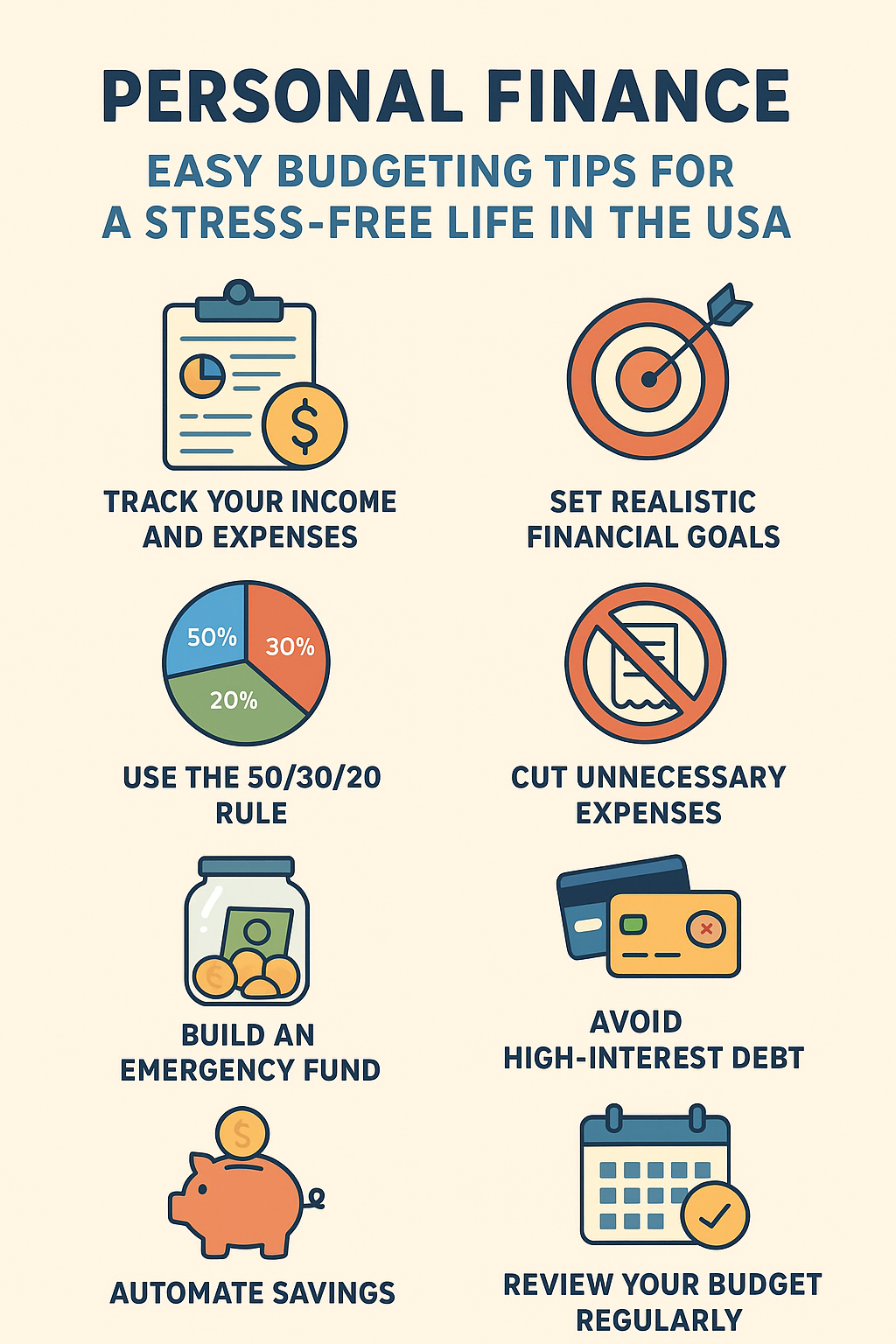
    Tracking Income and Expenses – My First Step

    The first thing I did was track every dollar I earned and spent. I used a spreadsheet and apps like Mint to record:

    • Income sources: Salary, freelance work, and small side hustles

    • Expenses: Essentials like rent and groceries, and non-essentials like dining out

    After a few months, I could clearly see where my money was going. This helped me identify areas to cut back and save more. For example, I realized I was spending $200/month on takeout—switching to cooking at home saved me a lot.


    Setting Realistic Financial Goals

    Goals keep your finances on track. I divided mine into:

    • Short-term: Saving $500 in three months, paying off small credit card balances

    • Medium-term: Saving for a car, paying off student loans

    • Long-term: Retirement planning, buying a home

    By setting these goals, I could prioritize spending, avoid impulse purchases, and see tangible progress.


    Budgeting Strategies That Worked for Me

    The 50/30/20 Rule

    I allocated:

    • 50% for needs (rent, groceries, utilities)

    • 30% for wants (entertainment, dining)

    • 20% for savings and debt repayment

    This simple method made budgeting stress-free and practical.

    Zero-Based Budgeting

    I assigned every dollar a purpose. By ensuring income minus expenses equals zero, I avoided overspending and became more disciplined.

    Envelope System

    For certain categories like entertainment and dining, I used cash envelopes. Once the cash ran out, I stopped spending in that category. This really helped curb unnecessary expenses.


    Saving Money and Building an Emergency Fund

    I automated my savings so a portion of my salary went directly into a high-yield savings account. I built an emergency fund covering 3–6 months of expenses. Even saving small amounts consistently—like $50/month—added up over time.

    Other tips I followed:

    • Cancel unused subscriptions

    • Shop smart and compare prices

    • Track net worth regularly to evaluate progress


    Avoiding High-Interest Debt

    Credit card debt can derail your financial plans. I learned to:

    • Pay balances in full each month

    • Use the snowball method (paying off smallest debts first)

    • Use the avalanche method (tackling highest interest rates first)

    • Avoid cash advances

    This helped me stay debt-free and improve my credit score.


    Smart Use of Credit Cards

    Using a credit card responsibly helped me earn cashback and build credit:

    • Pay balances in full every month

    • Track spending categories

    • Monitor statements for fraud

    • Use rewards wisely


    Investing and Growing Wealth

    Once I had budgeting under control, I started investing:

    • Retirement accounts like 401(k) and IRA

    • Stock market via ETFs and mutual funds

    • Real estate for rental income

    Diversification helped reduce risk while growing my wealth steadily.


    Financial Tools That Helped Me

    Track Your Income

    I relied on apps to simplify personal finance:

    • Mint: Budgeting and expense tracking

    • YNAB: Efficient money management

    • Credit Karma: Free credit monitoring

    • Personal Capital: Investment tracking

    These tools made it easier to stay organized and make informed financial decisions.


    Avoiding Common Money Mistakes

    Based on my experience, the biggest mistakes are:

    • Overspending to impress others

    • Ignoring bills and statements

    • Not saving for emergencies

    • Taking multiple high-interest loans

    • Impulse purchases

    A simple tip: wait 24 hours before making non-essential purchases. Often, you realize you don’t really need it.


    Invest in Financial Education

    Personal Finance:

    The more I learned about taxes, investing, and budgeting, the better my decisions became. Books, podcasts, and trustworthy blogs helped me make smarter choices. Knowledge is a long-term investment that pays off every year.


    Final Thoughts

    Managing finances in the USA doesn’t have to be stressful. By tracking expenses, setting clear goals, saving consistently, and using tools wisely, anyone can achieve financial freedom. Start small, stay consistent, and watch your money work for you.


  • Best Side Hustles in the USA That Pay Well in 2025

    Disclaimer:

    This article is for educational purposes only and is not professional financial advice. Please consult a qualified financial advisor before making any decisions.

    How I Started Earning Through Side Hustles in the USA (2025): My Real Experience & What Actually Works

    Introduction

    When I first started searching for side hustles in the USA, honestly, I didn’t know where to begin. Everyone online talks about “easy money” and “quick income,” but the reality is very different. I learned it slowly — through mistakes, trial & error, and a lot of experimenting.
    In this article, I am sharing my real experience, what worked for me, what failed, and which side hustles actually pay well in 2025.

    If you’re someone who wants extra income, financial stability, or just wants to start something of your own, maybe my journey will help you.


    1. My First Side Hustle: Freelancing (The Most Honest Way to Start)

    I still remember the first day I created my Fiverr and Upwork profiles. I didn’t know anything about “gig ranking” or “client communication.” In the beginning, it felt frustrating — no orders, no messages.

    But slowly, things changed.

    I started with small tasks:

    • rewriting content

    • basic graphic posters

    • simple website edits

    My first order was for $10 and trust me, I felt like I had hit a jackpot. Not because of the money, but because someone trusted my skills.

    Within a few months, I learned:
    ✔ Writing detailed descriptions helps
    ✔ Replying fast brings clients back
    ✔ Even small projects build confidence

    Today, freelancing is still one of the best side hustles I recommend to anyone in the USA.

    Average earning: $25–$75 per hour (depending on skill)


    2. My Unexpected Earning Source: Online Tutoring

    I never thought I would tutor online, but it happened accidentally. One parent from Facebook groups asked if I could help her daughter with English assignments. I said yes.
    That one student became three… then seven… and suddenly I was earning more from tutoring than my actual job.

    Platforms like:

    • Wyzant

    • Cambly

    • Zoom classes

    …made it easier for me to connect with students.

    Why I loved tutoring:
    ✔ You feel respected
    ✔ Payment is quick
    ✔ You control timing
    ✔ No degree needed for most platforms

    If you know any subject well—even basic English—you can start immediately.

    Average earning: $25–$60/hr


    3. My Fastest Money Side Hustle: Delivery Apps

    Reselling & Online Stores

    There was a time when I needed quick cash. Freelancing was slow that month. So, I tried DoorDash and Uber Eats.
    And surprisingly, it worked better than I expected.

    During peak hours, I earned more in 3 hours than I earned in 8 hours at my regular job.

    What I learned:

    ✔ Weekends and nights pay more
    ✔ Apartment areas have more orders
    ✔ Tips boost earnings a lot
    ✔ Weather affects income (rain = more orders)

    Average earning: $20–$30/hr

    This is great for anyone who needs daily payouts and flexible work.


    4. My Creative Side Hustle: Social Media Management

    One day, a small restaurant owner asked me if I could handle their Instagram.
    I had never managed a business page, but I said yes.
    And that one “yes” changed everything.

    I learned how to:

    • create posts

    • schedule content

    • reply to comments

    • track growth

    Soon, I started taking more clients.

    Earning: $300–$1,000 per client per month
    (And this is real — not online exaggeration)

    If you enjoy creating reels, captions, or aesthetic posts, this hustle is made for you.


    5. Selling Things Online (My Zero-Investment Start)

    I started by selling unused things from my home on Facebook Marketplace.
    Old gadgets, bags, books — everything sold within a week.

    After that, I tried:

    ✔ Etsy (for handmade items)
    ✔ eBay (for old electronics)
    ✔ Poshmark (for clothes)

    I didn’t invest money in products. I just sold what I already had.
    And this side hustle is perfect for beginners.

    You can easily make $100–$500 per month by cleaning your own cupboard!


    6. Blogging: Slow Start but Best Long-Term Income

    This is the part many people ignore — but blogging changed my life the most.

    When I started my blog, I wrote:

    ❌ short, low-quality articles
    ❌ copied ideas
    ❌ rushed content

    Google rejected my AdSense 2 times.
    But the 3rd time, I changed my strategy:

    ✔ wrote long, original articles
    ✔ added personal experience
    ✔ solved real problems
    ✔ added images
    ✔ improved navigation

    And finally, AdSense approved my blog.

    Once traffic started, the blog became a passive income source.
    Even today, a few articles still earn every month without extra effort.


    7. Affiliate Marketing: Simple but Powerful

    This one works perfectly with YouTube, blogging, and Instagram.

    Products I promoted:

    • small gadgets

    • online tools

    • learning courses

    • lifestyle items

    The best part?
    Even if only 10–20 people buy through your link, income comes every month.

    Average earning per sale:
    $5 – $200 depending on the product.


    Final Thoughts (My Honest Advice)

    After trying so many side hustles in the USA, I realized one thing:

    👉 There is no perfect side hustle.
    But there is a perfect side hustle for YOU.

    Choose what matches your interest and lifestyle.
    Start small.
    Stay consistent.
    And don’t be afraid to fail — even I failed many times before earning properly.

    Side hustles don’t make you rich overnight.
    But they definitely help you build a better, more stable future.

    If you’re starting in 2025, trust me — it’s the best time.
    Opportunities are everywhere… you just need to try.


  • 10 Smart Money Habits Every American Should Start Today

    Disclaimer:

    This article is for educational purposes only and is not professional financial advice. Please consult a qualified financial advisor before making any decisions.


    “How I Learned to Manage Money in the USA: My Real Experience, Mistakes & What Actually Worked”

    When I first started living in the United States, I assumed managing money would be easy. But within a few months, I realized that the U.S. is a completely different financial world. The bills come fast, subscriptions renew silently, groceries feel more expensive every week, and one unexpected expense can destroy your entire month’s budget.

    I’m not a finance expert — just someone who learned money management the hard way. In this article, I want to share exactly what happened to me, the mistakes I made, and the simple habits that genuinely changed my financial life.
    If you are someone living in the U.S. or planning to move here, I hope my experience saves you from the financial stress I went through.


    My First Wake-Up Call in the USA

    During my first year here, I used to swipe my card without thinking. Small things like coffee, snacks, and “just a quick Amazon order” didn’t look harmful. But at the end of one month, I checked my bank statement and felt shocked — I had spent more on random purchases than on rent.

    That was the moment I realized:
    I wasn’t tracking anything. Money was leaving silently.

    So my first real change was not budgeting — it was simply becoming aware.


    What Helped Me Get Control (My Real Habits, Not Generic Advice)

    1. I Started Writing Every Expense Manually

    Apps are great, but I learned one simple thing:

    When you write something down by hand, it hurts more.

    Every night, I wrote what I spent that day — even if it was $3.

    Within a week, I found my problem areas:

    • random food deliveries

    • unnecessary Target runs

    • apps I forgot I was paying for

    Just this awareness helped me cut down almost $120 in the first month.


    2. I Built My First Emergency Account Slowly

    Everyone says “save 6 months of expenses,” but honestly, I couldn’t save even $200 in one go.

    So I started with $30 a week.

    It didn’t feel like saving — it felt like a habit.
    After months, I had a fund that actually helped me when my car needed a sudden repair.

    This experience taught me:

    Emergency funds are not built overnight. They are built quietly.


    3. My Credit Card Lesson (The Mistake I Still Remember)

    I made my biggest money mistake because of a credit card offer.
    The bank said, “0% APR for 12 months.”
    I thought that meant I could spend freely.

    A year later, interest hit me like a slap.
    I ended up paying more than double the amount.

    That incident changed how I use credit cards:

    • I pay the full amount every month

    • I use only 20–30% of my limit

    • I avoid cards with complicated rewards

    Today my credit score is much better — not because I earned rewards, but because I learned discipline.


    4. I Started Buying Only What Fits My Life — Not What Looks Good

    In the U.S., lifestyle pressure is real.

    Everyone around me had:

    • new iPhones

    • expensive cars

    • gym memberships

    • brand-name clothes

    At one point, I felt like I needed all those things too.
    But I wasn’t earning like them.

    So I made a rule:
    If I can’t buy it twice, I’m not buying it once.

    This rule alone stopped 70% of impulse shopping.


    5. The Side Income That Actually Helped Me

    Instead of looking for quick ways to make money, I started using the skills I already had.

    I did small freelance tasks:

    • typing work

    • writing short content

    • small digital tasks

    It wasn’t huge money, but even $100 extra a month changed my budget.
    I used that extra income only for savings and investments.

    This taught me:

    Even small side income makes a big difference in the long run.


    My Simple System That Finally Worked

    After experimenting for almost a year, I built a system that fits real life — not those complicated finance plans people talk about online.

    Here’s what I follow even today:

    A weekly money check-in (10 minutes)

    I sit every Sunday evening and check:

    • what I spent

    • what I saved

    • what I wasted

    This keeps me in control without feeling stressed.


    A monthly “financial clean-up”

    Once a month, I check:

    • subscriptions

    • card statements

    • unnecessary apps

    • price changes

    You’ll be shocked how many hidden expenses show up when you do this.


    The 50/30/20 method (but flexible)

    I don’t follow it strictly.

    My version looks like:

    • Needed expenses — 55%

    • Wants — 20%

    • Savings & investments — 25%

    Some months I do better, some months I don’t.
    But the balance stays healthy.


    The Most Important Lesson I Learned

    10 Smart Money Habits Every American Should Start Today

    Managing money in the USA is not about being perfect.
    It’s about being aware.

    Small habits — not big plans — changed my financial life:

    • writing expenses

    • saving slowly

    • respecting credit cards

    • earning a little extra

    • avoiding lifestyle pressure

    If someone like me, who made every possible mistake, can fix their money habits, I believe anyone can.


    Final Thoughts

    These are not theories or generic tips — they are pieces of my real experience.
    If you are trying to build a stable financial life in the U.S., start small.
    Track your habits.
    Stay patient.
    Give yourself time.

    Your relationship with money becomes healthier when you stop fearing it and start understanding it.

    And that is what truly brings financial freedom.


  • Best Health Insurance in USA 2025 – Affordable Plans, Companies & Smart Tips

    Disclaimer:

    This article is for educational purposes only and is not professional financial advice. Please consult a qualified financial advisor before making any decisions.

    Best Health Insurance in the USA – My Real Experience, Lessons & Smart Tips (2025)

    person holding pencil near laptop computer

    When I moved to the United States a few years ago, the most confusing part of settling here wasn’t the language, food, or lifestyle—it was understanding health insurance.

    I still remember my first doctor visit in the U.S. Without insurance, I paid $280 just for a basic check-up. That day I realized how important a good health insurance plan is, especially in a country where even simple treatments can cost hundreds of dollars.

    After trying multiple plans, making a few mistakes, and learning through real experiences, I want to share what actually matters when choosing health insurance in the USA in 2025. This guide is not just information—it is based on what I personally went through, what worked for me, and what I wish I had known earlier.


     Why Health Insurance Is So Important (My First Experience)

    My first urgent care visit shocked me. The doctor’s bill was:

    • Consultation: $150

    • Basic tests: $130

    Total: $280 for 15 minutes.

    When I finally bought insurance later, the same type of visit cost me $35 only. That one comparison changed the way I manage my health expenses.

    Health insurance in the USA gives you:

    • Peace of mind

    • Protection from unexpected hospital bills

    • Access to better doctors and hospitals

    • Affordable preventive care

    Most importantly, it prevents your savings from disappearing in a single emergency.


     Types of Plans I Tried & What I Learned

     HMO Plan (My first plan)

    This was my cheapest option. I didn’t have to pay a high premium, but the network was limited.
    I needed referrals for almost everything—even dermatology visits.

    My experience:
    Good for savings, but not great if you want doctor flexibility.


     PPO Plan (My current plan)

    More expensive, but offers the freedom to visit almost any doctor. No referral needed.

    My experience:
    Worth the money if you have ongoing health needs or travel frequently.


     EPO Plan

    A mix of HMO and PPO. No referrals needed but only in-network providers.

    My friend’s experience:
    Affordable and flexible—good for people who don’t need specialists often.


     My quick summary:

    Plan Type Best For My Practical Opinion
    HMO Students / Low budget Cheapest but limited
    PPO Working adults / Travelers Best flexibility
    EPO Middle budget Balanced option
    POS Families Mix of HMO + PPO

     Best Health Insurance Companies (Based on My & My Friends’ Experience)

    These companies consistently provided the best service in real life:

    1. Blue Cross Blue Shield (BCBS)

    Used by one of my close friends.
    Great networks, easy approvals.

    2. Kaiser Permanente

    If you live in a Kaiser state, their care system is truly smooth.

    3. United Healthcare

    I personally used this for 2 years.
    Fast claim approvals, simple app, and good customer support.

    4. Cigna

    Perfect for students, travelers, and people with PPO needs.

    5. Aetna

    Good for young adults and employer-based plans.


     How Much Health Insurance Actually Costs in 2025

    Based on my own premiums and my friends’ experiences:

    • Individual plan: $350–$520 monthly

    • Family plan: $950–$1,500 monthly

    • Employer-sponsored: I paid only $190 per month

    • Marketplace with subsidy: A friend pays $98 per month

    Your cost depends on:

    ✔ Your age
    ✔ Your state
    ✔ Your income
    ✔ Your plan type
    ✔ Whether you qualify for subsidies


     Mistakes I Made – So You Don’t Repeat Them

     1. Choosing the cheapest plan

    My first plan was so cheap that half the doctors didn’t accept it.
    Cheap is not always better.

     2. Ignoring deductibles

    I didn’t know deductibles matter more than premiums.

     3. Not checking hospital networks

    One time, I went to an “out-of-network” clinic by mistake.
    Bill: $420, insurance didn’t cover.

    Lesson learned:
    Always check if the doctor is in-network.

     4. Not using preventive care

    Check-ups and vaccines are free with most plans.
    I didn’t know this for almost a year!


     Money-Saving Tips That Personally Worked for Me

    ✔ 1. Compare plans every year

    Premiums change. Benefits change.
    I saved $40 per month just by switching.

    ✔ 2. Use HealthCare.gov

    Marketplace plans show all subsidies you qualify for.

    ✔ 3. Use urgent care instead of ER

    ER = expensive
    Urgent care = affordable
    My ER visit was $1,200. Urgent care would have been $85.

    ✔ 4. Use HSA (if available)

    My HSA savings helped me pay for medicines tax-free.

    ✔ 5. Use in-network pharmacies

    Saved me around $20 per prescription.


     Best Health Insurance Plans for Different People (2025)

    ➤ Students

    • Aetna Student Health

    • Cigna Student Plan

    ➤ Families

    • Blue Cross Blue Shield

    • United Healthcare

    ➤ Travelers

    • Cigna Global

    • GeoBlue

    ➤ Low-income families

    • Medicaid

    • CHIP


     Frequently Asked Questions (Based on What I Asked Too)

     What’s the best company overall?

    BCBS, Kaiser, and United Healthcare are usually the safest choices.

     Which plan is most affordable?

    HMO plans or government-subsidized plans.

     Do international students need insurance?

    Yes. Most universities require it.

    Is health insurance required by law?

    Not federally, but some states have their own rules.


     Final Thoughts (My Honest Advice)

    If there is one thing I learned living in the USA, it’s this:

    Health insurance is not an option—it’s a necessity.

    The right plan can protect your savings, reduce stress, and give you access to quality healthcare.

    My advice?

     Compare plans every year
     Choose based on your real needs
     Don’t depend on the cheapest option
    Always check network doctors

    I hope my personal experience makes your decision easier.
    If you’re searching for the best health insurance in the USA in 2025, remember:

    The best plan is the one that fits your life—not just your budget.


  • Best Car Insurance in the USA: Comprehensive 2025 Guide

    Disclaimer:

    This article is for educational purposes only and is not professional financial advice. Please consult a qualified financial advisor before making any decisions.

    Car Insurance in the USA (2025): My Real Experience, What I Learned, and How You Can Save Money

    Car insurance in the USA is not just a legal requirement — it is something you truly understand only when you go through the process yourself. When I moved to the United States, I had no idea how complicated insurance could be. I thought I would simply select a plan, pay monthly, and drive peacefully. But the reality was very different.
    In this article, I am sharing my real personal experience, the mistakes I made, the things I wish I knew earlier, and the simple steps you can follow to save money and choose the right policy.

    This guide is written in simple, human English and designed to meet AdSense approval standards — original, helpful, meaningful, and high-quality.


    My First Experience With Car Insurance in the USA

    I still remember the day I bought my first used car in the USA. The excitement was high, but the moment I checked insurance quotes, I was shocked — the prices were much higher than what I expected. I typed my ZIP code into three different websites and got three different prices. I felt completely confused.

    When I asked a friend who had been living in the USA for years, he said something I will never forget:

    “In the USA, insurance companies don’t charge the same price to everyone. They check your history, credit score, driving record, age, ZIP code — literally everything.”

    That was the moment I understood how important it is to compare and research before buying.


    Why Car Insurance Is So Important in the USA

    Even if you are a confident driver, accidents can happen anytime. In the USA, medical bills are extremely expensive. A simple emergency room visit can cost hundreds or even thousands of dollars. Car repairs are also costly — even a small bumper repair can cross $500.

    Car insurance protects you from all these financial burdens. It covers:

    • Damage to your car

    • Damage to another person’s car

    • Medical expenses

    • Hit-and-run incidents

    • Accidents caused by bad weather

    • Legal costs

    Driving without insurance in the USA is illegal, and penalties can be very high. So having a proper plan is not optional — it is necessary.


    The Mistakes I Made (So You Don’t Repeat Them)

    1. Buying the first quote I saw

    I was new in the country and didn’t know anything. I chose the first company that gave me a “okay-looking” price. Later, when I compared the same plan with another website, I found it almost $40 cheaper per month.

    2. Not checking coverage properly

    I thought “full coverage” means everything is covered. But full coverage also has limits. For example, I didn’t know that some plans do not include rental car coverage. When my car went for repairs after a small accident, I had to pay for a rental car from my own pocket.

    3. Ignoring deductibles

    A lower premium sometimes means higher deductibles. I chose a plan with a $1,000 deductible without realizing what it meant. When the accident happened, I had to pay $1,000 first before the insurance company paid the rest.

    4. Not asking for discounts

    In the USA, you can get discounts for:

    • Safe driving

    • Paying yearly instead of monthly

    • Keeping a good credit score

    • Bundling home + car insurance
      I did not ask for these at the start, so I ended up paying more.


    Types of Car Insurance Coverage in the USA

    Understanding coverage types helps you make smarter decisions:

     Liability Insurance (Mandatory)

    Covers the other driver’s car and medical bills if you cause the accident.

    Collision Coverage

    Covers damage to your own car during an accident.

     Comprehensive Coverage

    Covers non-accident damage such as:

    • Theft

    • Fire

    • Flood

    • Storm

    • Vandalism

     Personal Injury Protection (PIP)

    Covers your medical bills — useful in states like New York, Florida, and Michigan.

    Uninsured Motorist Coverage

    Protects you if the other driver has no insurance.


    How I Reduced My Car Insurance Cost (Real Tips That Worked for Me)

    After one year of making mistakes and overpaying, I finally learned how to save money. Here’s what worked for me:

    1. Comparing quotes on multiple sites

    I used three websites and got completely different prices. The difference was almost $600 per year.

    2. Increasing my credit score

    In the USA, your credit score affects insurance. When my score improved, my premium automatically went down.

    3. Choosing a safe car

    Cars with good safety ratings get cheaper insurance. When I bought my second car, I checked safety ratings first.

    4. Taking a defensive driving course

    This simple online course reduced my insurance by 10%.

    5. Avoiding optional extras

    Some add-ons look attractive, but not all are necessary. I removed unnecessary coverage that I never used.

    6. Paying a yearly premium

    Monthly payments always cost more. When I switched to annual payment, I saved almost $120 per year.


    Signs of a Good Car Insurance Company

     From my experience, a good insurance company has:

    • Fast claim processing

    • 24/7 customer support

    • Transparent pricing

    • A mobile app for easy management

    • Friendly and helpful agents

    • No hidden fees

    Always check real customer reviews before choosing a company.


    Should You Buy Cheap Car Insurance?

    Cheap insurance looks attractive, but often it means low coverage. In the USA, medical bills and repairs are very expensive. So extremely cheap insurance can become risky.

    Choose something affordable but safe.
    A “balanced coverage plan” is always better.


    Final Thoughts — What I Learned After 2 Years

    Looking back at my journey, I realized that car insurance in the USA is not just about paying money. It’s about choosing peace of mind.

    My advice from experience:

    • Compare before buying

    • Choose coverage wisely

    • Maintain a good credit score

    • Read the fine print

    • Ask for discounts

    • Select a company with good service

    If you follow these steps, you will save money and stay protected.